
About the Programme
The BioSustainability Design (BSD) Novo Nordisk Foundation Fellowship Programme is a 10-month, full-time, paid talent and innovation programme designed to accelerate the green transition in the global agri-food sector.
BSD aims to educate and upskill a diverse, talented, and select group of fellows with previous experience from science or industry to become change agents who can drive the green transition. Our fellows learn to uncover sustainability needs and potentials in the industry and translate them into implementable solutions, products and concepts – not just at a single-company level, but across the entire food sector – to shape a more resilient and environmentally responsible food system.
Inspired by the success of the Novo Nordisk Foundation’s BioMedical Design Fellowship Programme, BSD applies the same principles of needs-driven innovation and interdisciplinary teamwork, originally created by Stanford University, to foster systemic change.
Managed by a dedicated team at the Danish Technological Institute (DTI) with support from the Novo Nordisk Foundation, the programme develops talents to change the food system.
Fellows accepted into the programme will receive a monthly stipend of DKK 40,000 (approx. € 5,350) for the duration of their cohort.
Launched in 2025, the programme will welcome its first cohort in Aarhus in 2026/2027, expanding to run simultaneously in both Aarhus and Copenhagen (Taastrup) from Cohort 2 in 2027/2028.
Our approach
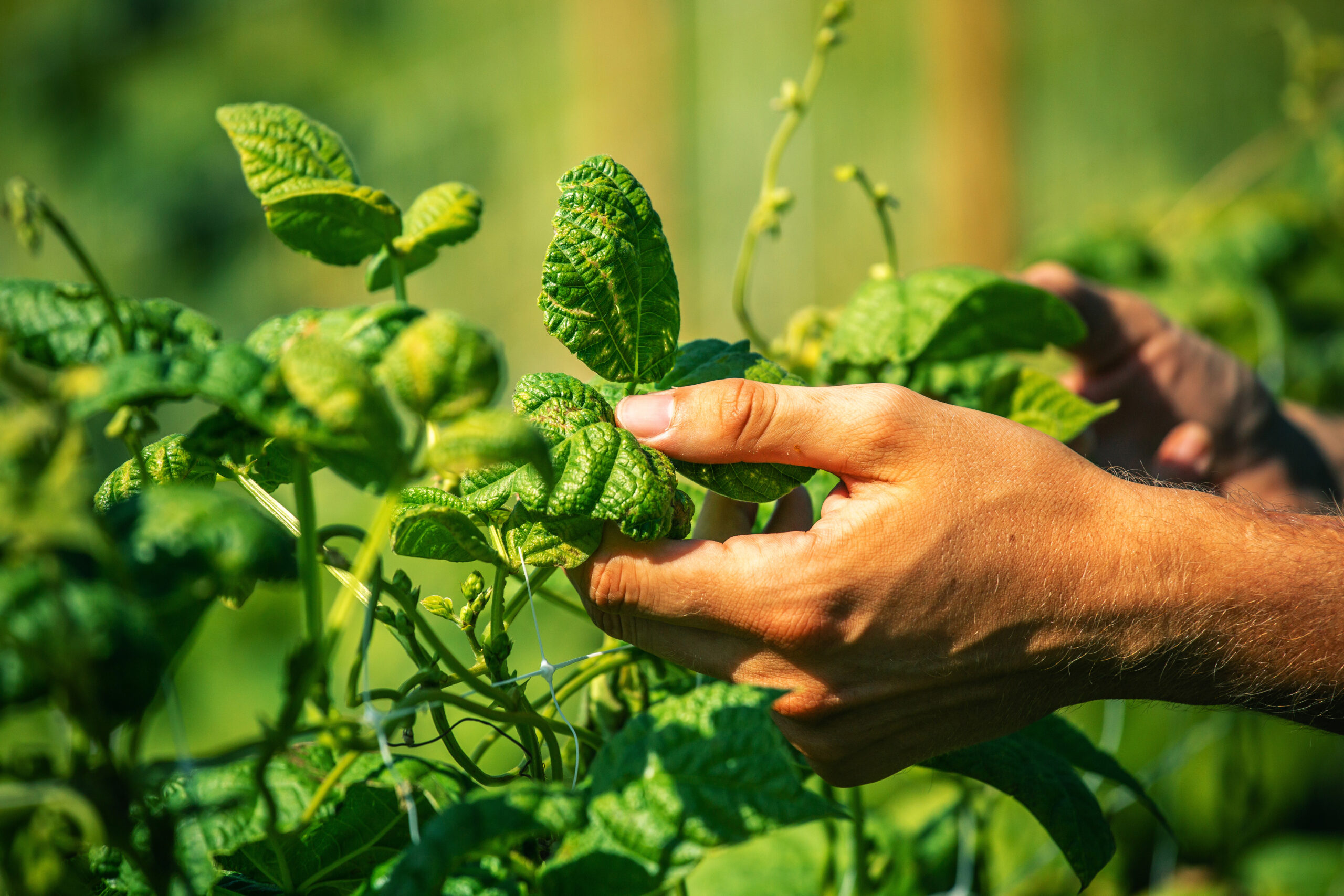
Our fellows will during their 10-months fellowships be using the needs-driven innovation approach, created by Stanford University.
Need-driven innovation is an approach where new products, services, or processes are developed in direct response to an identified customer/user need, pain point, or market gap.
Instead of starting with a new technology and searching for a use for it, this method begins by understanding the user’s problem and then designing a targeted solution to solve it.
- User-Centric: Focuses heavily on customer feedback, empathy, and market research
- Problem-First: Identify Need → Develop Solution → Market Adoption
- Lower Market Risk: Because a verified demand already exists, the resulting innovations typically face faster adoption and lower rates of commercial failure compared to “technology-push” innovations.
Our Vision & Mission
Our vision for the BioSustainability Design Novo Nordisk Foundation Fellowship Programme is to transform the agri-food sector by training highly skilled, cross-disciplinary talents.
Through training and immersion in the industry, our fellows will be equipped to lead the green transition on an international scale with an innovative and sustainability-oriented mindset.
Our mission
Our mission is to equip talented professionals with the practical hands-on skills, entrepreneurial mindset, and professional network needed to drive systemic change. With support by industry mentors, host companies, and academic experts, we achieve this by providing:
- 10 months of hands-on educational training in needs-driven innovation methodologies and industry immersion
- Support in the development and implementation of new solutions to unmet needs in the food industry
- A global perspective through international collaboration with our East African sister programme
Key challenges we address
Throughout the programme, the fellows will address three main challenges aligned with the programme’s vision and mission.
Without new solutions to these three challenges, it is hard to achieve the goal of a more sustainable, resilient, and efficient food sector and resource utilisation. This is crucial, as the global agricultural sector accounts for approximately 26% of global emissions and 70% of global freshwater use, according to IPCC (2022) and UN World Water Development report (2024).
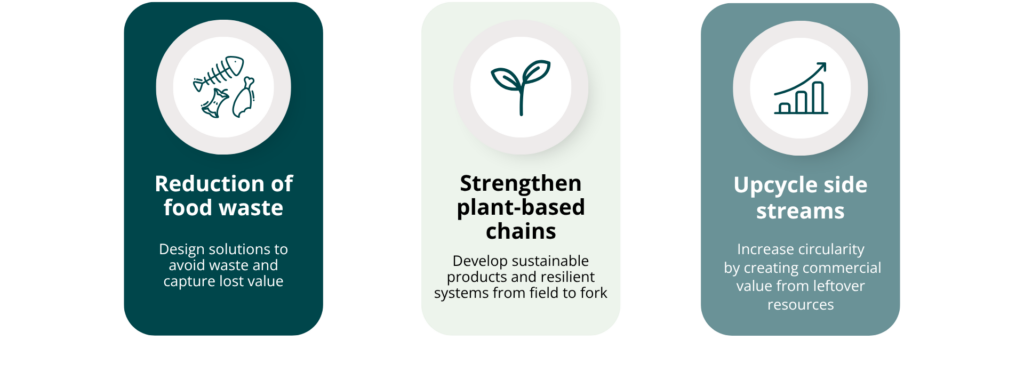
Our fellows will address three key challenges which are:
- Reducing food waste: design solutions to avoid waste and capture lost value
- Strengthening plant-based value chains: develop sustainable products and resilient systems from field to fork
- Upcycling side streams: increase circularity in the food system by creating commercial value from leftover resources
BioSustainability Design Programme for East Africa
We have a sister programme covering East Africa which aims to build innovation capacity and entrepreneurial skills among early- to mid-career professionals in the agri-food sector across Kenya, Uganda, Rwanda, and Ethiopia.
Both programmes aim to foster cross-regional learning by connecting fellows and partners, sharing knowledge and ensuring that solutions developed with local relevance can be globally informed and inspired.
Grounded in design thinking and social entrepreneurship principles, the East African programme is led by the World Food Programme IGNITE Innovation Hub.
Although it is two separate programmes, interaction among fellows in Africa and Denmark is facilitated as part of the curriculum plans.
Do you have a question?
Please feel free to contact us, If you have any questions, at Info@biosustainabilitydesign.dk